Port highlight: Port of Strasbourg (FR): 100 Years at the Heart of Europe and the Upper Rhine
Press Releases
15 September 2026
The history of the city of Strasbourg is closely linked to that of its port, which has been a driving force behind its economic development for centuries. From the Middle Ages onwards, port activities were concentrated along the Ill River, near the Old Customs House, where the Corporation of the Anchor played a major role in Rhine river trade.
In the 19th century, the opening of the Rhône–Rhine Canal and the Marne–Rhine Canal strengthened Strasbourg’s integration into France’s major transport networks. The excavation of the Hospital Basin in the 1880s, followed by that of the Austerlitz Basin, marked a decisive stage in the development of the port. In 1892, the Austerlitz Basin welcomed its first steamship, symbolising the modernisation of trade. At the beginning of the 20th century, the creation of the Commerce and Industry basins gave the port direct access to the Rhine and reinforced its international role.
The creation of the Port autonome de Strasbourg in 1926 gave new momentum to the development of port infrastructure. Over the following decades, the facilities continued to expand with the construction of new locks, basins and logistics areas. As a true interface between river, rail and road networks, the port accompanied the industrial transformation of Alsace and the Rhine region.
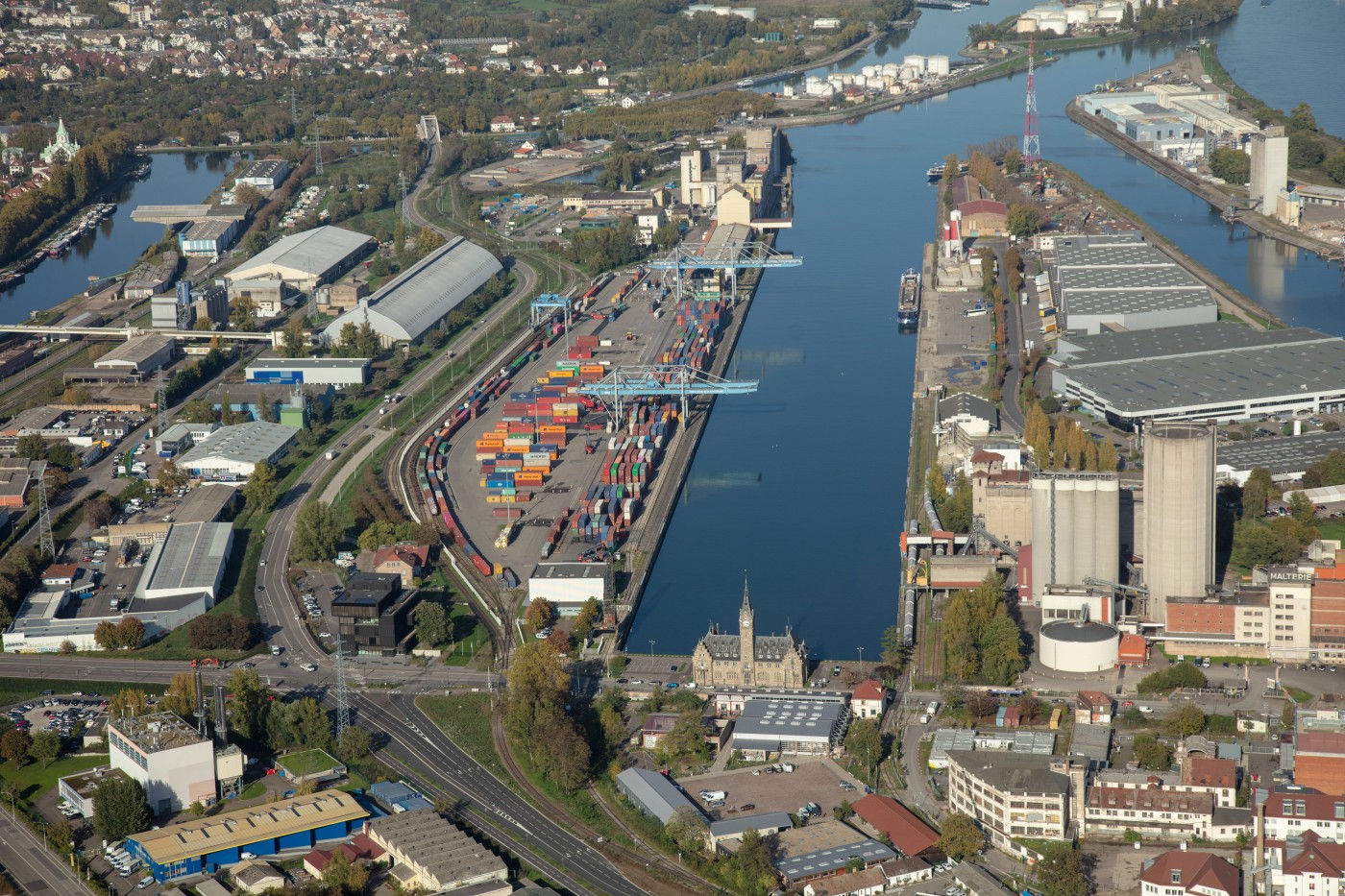
Today, the Port autonome de Strasbourg is the leading French port on the Rhine, the second-largest river port in France and the main multimodal platform in the Upper Rhine. Located at the crossroads of France, Germany and Switzerland, it connects territories, businesses and populations through the complementary use of river, rail and road transport. With more than 500 companies established within the port area, nearly 10,000 direct jobs and 7.2 million tonnes of goods transported, it is a major asset for the regional economy and an essential driving force for economic development and cross-border cooperation.
Its development illustrates the region’s ability to combine historical heritage, logistical innovation and European openness. Today, the Port is also committed to industrial, energy and logistics transitions, contributing to the construction of a sustainable future for the Upper Rhine. More than a transport facility, it remains a defining element of Strasbourg’s identity and a symbol of the city’s role as a crossroads at the heart of Europe.
Related documents
No attachments.